

The Real Reason Marketing Feels Harder This Year
Let’s talk SEO. If you're not already familiar with it, you should be. SEO stands for Search Engine Optimization - basically, the magic that gets your content found on Google, Bing, and every other search engine out there. But today, SEO takes on a new meaning: Search EVERYTHING Optimization. Digital searches are now moving past search engines and jumping to social media and beyond.
But here’s the thing to remember: no matter how you define SEO, it is not just about throwing some random keywords out there and hoping for the best. It’s way more strategic than that.
The challenge today is that people are no longer searching exclusively on Google. Prospects search on LinkedIn, Instagram, YouTube, Reddit, TikTok, and even AI platforms like ChatGPT, Microsoft Copilot, and Gemini. Search Engine Optimization has evolved into Search Everything Optimization, requiring businesses to understand how buyers discover information across multiple digital channels.
Today, we’re diving deep into how keyword research is the cornerstone of effective SEO. You’ll learn how to choose the right keywords, why they’re important for more than just your website, and how to use them across different channels to dominate the search game. Ready to optimize everything? Let’s go!
What is Keyword Research?
Keyword research is searching for the exact words people type into search engines when they’re looking for what you offer. Think of it as getting inside your audience’s head and knowing what they really want to find. Whether it’s products, services, or random info, keyword research is your way of making sure you show up in front of the right crowd.
The process? It’s all about digging through the words and phrases people are typing in, figuring out what’s hot (and what’s not), and using that data to make your content and website stand out. It's not just guessing - it’s about the data. And it’s how you climb the rankings.
So how do you do it? You use the right tools. We recommend SEMrush, but there are many keyword research tools available. These help you find what people are searching for, how often they’re searching, and how tough it’s going to be to land on page one.
What is the Goal of Keyword Research?
Why bother with keyword research in the first place? Simple: it’s all about getting the right people to your website. The goal is to identify the keywords that will pull in high-quality, targeted traffic - people who are actually looking for what you’re selling. You don’t want just any visitors; you want the ones who are ready to click, buy, or engage.
Here’s our pro tip: keyword research isn't just about numbers or volume; it's about understanding what your audience actually wants. What are they searching? What problems are they trying to solve? By tapping into their search behavior, you can create content that answers their questions and meets their needs.
Beyond driving website traffic, keyword research helps organizations understand buyer priorities, concerns, and decision-making patterns. For business leaders, keyword data acts as market intelligence. It reveals what prospects are actively researching, what problems they need solved, and how close they may be to making a purchasing decision.
If you’re not aligning your content with user intent, you're wasting your time. You want to create content that not only speaks to what your audience is searching for but also ranks well in search engines. The right keywords help you hit both of those marks, and trust me, that’s how you get to the top.
Long Tail vs Short Tail Keywords: Which Drives Better Business Results?
One of the biggest mistakes organizations make is focusing exclusively on high-volume keywords without considering buyer intent. Understanding long tail vs short tail keywords is critical for modern Search Everything Optimization.
Short tail keywords are broad searches such as "marketing" or "cybersecurity." While they may generate significant search volume, they are often highly competitive and attract users at very different stages of the buying journey.
Long tail keywords are more specific searches such as "B2B marketing agency for managed IT providers" or "cybersecurity compliance solutions for defense contractors." These phrases typically have lower search volume but attract prospects who have a clearer problem, stronger intent, and are often further along in the decision-making process.
For B2B organizations, long-tail keywords frequently produce higher-quality traffic because they align more closely with real business challenges. While short-tail keywords can support brand awareness, long-tail keywords often support lead generation, sales conversations, and revenue growth.
The most effective keyword strategies utilize both. Short-tail keywords establish broader visibility, while long-tail keywords help capture buyers actively searching for solutions.
What to Consider
When you're diving into keyword research, there are a few key things you need to consider if you want to get it right and see results.
-
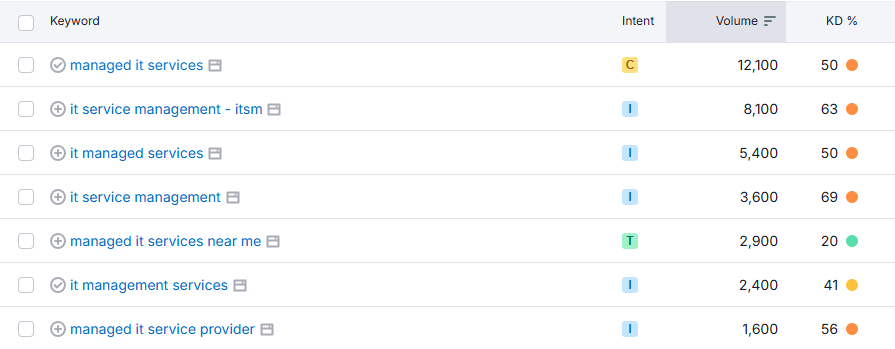
Monthly Searches: First off, you’ve got to know how many people are actually searching for a keyword. This is where search volume comes in. If a keyword has a high number of monthly searches, it’s likely popular - but that doesn’t automatically make it the best choice. Sometimes, the popular ones are just too competitive to rank for. So, while it's tempting to chase the big numbers, remember it’s not always the best move.
-
Search Intent: You can have all the keywords in the world, but if they don’t match up with what the user is really trying to do, they’re useless. Search intent is the why behind the search. Are people looking for information? Trying to make a purchase? Or maybe they’re just navigating to a specific website? Understanding this will help you create content that directly addresses what they’re after, whether it's answering a question or leading them down the path to a sale.
-
Trends: Search trends now extend far beyond traditional search engines. Organizations should monitor what buyers are searching on Google, social media platforms, video channels, online communities, and AI-powered search tools. Questions asked in ChatGPT today frequently become search engine queries tomorrow. Likewise, discussions on LinkedIn and Instagram often reveal emerging business challenges before they appear in keyword research platforms. Businesses that pay attention to search behavior across multiple channels gain a competitive advantage and deeper insight into customer needs.
-
Difficulty: Here’s the hard truth: not every keyword is winnable. Keyword difficulty, or competition score, shows you how tough it’s going to be to rank for a particular keyword. If you’re a small brand trying to rank for something like "shoes," you’re up against huge players with massive budgets. So, mix in some low-difficulty keywords to get your foot in the door while targeting the big boys with longer-tail keywords that are more specific and less competitive.
- Keyword Usage: In addition to understanding how to search for the right keywords, you also need to consider if you've used specific keywords on other pages. If you have, you'll want to ensure you don't cannibalize them by using them extensively on other pages. Learn more about keyword cannibalization here 👇
How to Use Keywords Across Different Channels
Now that you know what keyword research is and why it’s essential, let’s talk about how to use those golden keywords across various channels to get the most out of your efforts.
Website
Your website is the main player, so let's break it down:

-
Where to Place Keywords: It’s all about balance here. You want your keywords in the right spots like titles, meta descriptions, headings, and throughout the body content. Titles and meta descriptions help search engines understand what your page is about, while headings give both users and search engines quick access to what your content is targeting. But don’t just throw them in anywhere - context is king.
-
Use Keywords Naturally: Google is pretty sharp about detecting keyword stuffing (repeating many keywords over and over just to rank higher). That stuff is a big no-no. Instead, make sure the keywords flow naturally within your content. The point is to help people, not confuse them with keyword overload. Keep it relevant, and your readers (and Google) will thank you.
-
Landing Pages: Each product, service, or topic should have its own landing page with specific keywords targeted to it. This lets you capture traffic for specific searches and makes it easier to guide visitors to exactly what they’re looking for. Custom landing pages help you stand out in search results and convert visitors into customers.
Social Media
Social media isn’t just for memes, it’s a key part of your SEO strategy:

- Incorporate Keywords in Profiles, Bios, and Posts: Your social profiles should showcase your brand and keywords. Optimize your bios to include key phrases that describe what you do. Posts should also feature relevant keywords and search terms, making sure they fit naturally within the content, so users can find you when they search for those terms.
-
Hashtags: Hashtags are basically the keywords of social media. Research which hashtags align with your target audience’s searches, and use them in your posts to increase visibility. Just don’t go hashtag-crazy. Quality over quantity.
-
Social Signals: The likes, shares, and comments your posts get? That’s called social engagement, and it sends signals to search engines. When your posts are shared or commented on, it boosts your content's credibility, which can help with your rankings. So, create shareable content that people want to interact with.
-
Search Optimization for Social Platforms: Social media platforms are increasingly functioning as search engines. Users search Instagram hashtags, LinkedIn expertise, YouTube tutorials, TikTok recommendations, and Facebook groups to find answers and evaluate vendors. Including strategic keywords in profiles, captions, descriptions, alt text, and hashtags improves discoverability and helps platforms understand your content.
Other Channels

Now, let’s get into other channels where keywords can work their magic:
-
Email Marketing: Your email subject lines are prime real estate for keywords. If you’re selling a product, don’t waste that subject line. Optimize it with the keyword your audience is searching for, and make sure the body content is relevant to the subject line to keep that open rate high.
-
Video Platforms (e.g., YouTube): Video content is booming, and YouTube is the second-largest search engine in the world. To make the most of it, optimize your video titles, descriptions, and tags with the right keywords. This makes it easier for viewers to find your videos when they search for relevant topics.
Social Media Is the New Search Engine
Many business leaders still think of Google as the primary place prospects search for information. While Google remains important, buyer behavior has changed significantly.
Today, users frequently begin their research on Instagram, LinkedIn, YouTube, Reddit, and AI-powered platforms. They search for educational content, reviews, recommendations, expertise, and examples before ever visiting a company website.
Instagram is particularly important because users can search profiles, captions, hashtags, locations, Reels, and topics. Keywords placed throughout these elements help improve content discoverability. The same applies to LinkedIn posts, company pages, and YouTube video descriptions.
As search behavior continues evolving, businesses must ensure their keyword strategy extends beyond their website and into every platform where buyers look for answers.
Build a stronger B2B social media marketing strategy using our top advice 👇
Why Keywords Still Matter in the Age of AI Search
Some business leaders believe artificial intelligence is replacing traditional SEO. In reality, AI search experiences still rely heavily on content relevance, topical authority, and keyword context.
When users ask AI tools questions, those tools evaluate content across the web to identify trusted sources and relevant answers. Keywords help establish topic relevance and ensure AI systems understand what your content covers.
The difference today is that businesses should focus less on keyword repetition and more on creating comprehensive content that thoroughly addresses audience questions. Strong keyword research helps organizations become more visible in Google results, AI-generated answers, social media searches, and voice search experiences.
Keywords are not disappearing. They are evolving.
Learn how to make content for AI search engines 👇

Why It's Important to Use Keywords Beyond Your Website
It’s easy to think of your website as the only place where keywords matter, but if you really want to dominate the SEO game, you’ve got to spread those keywords far and wide. Here’s why using keywords beyond your website is crucial:
Broader Reach
Keywords aren’t just for your website. Using them across different platforms - social media, emails, videos - puts your brand in front of a much bigger audience. Every time you use the right keyword on another channel, you're increasing your visibility. More visibility means more opportunities for new customers to discover you. Simple as that.
This broader visibility is becoming increasingly important as search journeys become fragmented. A prospect may discover your company through an Instagram Reel, continue researching through Google, compare options on LinkedIn, and ask an AI assistant for recommendations before ever contacting your sales team.
Consistency Across Platforms
Being consistent with your keywords across multiple channels strengthens your brand’s presence. Think about it: When people search for you, whether on Google or on social media, they should find the same message. Using the same keywords across all platforms helps keep your branding tight and recognizable, making it easier for your audience to connect the dots back to your business.
Improved Search Engine Rankings
It’s not just about using keywords on your website - by strategically incorporating them into social media, blogs, videos, and email campaigns, you can drive traffic back to your site. Search engines love fresh, relevant content from multiple sources, and when your keywords are spread across the web, it boosts your SEO game. The more your brand pops up, the better your rankings.
Engagement
Keywords help you engage with your target audience on a deeper level. When you use the right terms on social media, in blog posts, or through email, you're speaking the language of your audience. It’s about understanding their needs and connecting with them on their terms. This engagement not only helps build relationships but also strengthens your SEO by driving organic traffic and improving interaction metrics.
The Power of Keyword Research for SEO
Effective keyword research is the backbone of a strong SEO strategy. Without it, you're essentially flying blind, hoping your content will magically reach the right people. By digging into what your audience is searching for and understanding their intent, you can create content that not only ranks well but also truly speaks to their needs. It’s about driving the right kind of traffic - targeted, high-quality traffic that converts.
But don’t just set it and forget it. Keyword research isn’t a one-time task; it’s a living, breathing part of your SEO strategy. To stay ahead of the competition, you’ve got to monitor, tweak, and refine your keyword strategy constantly. Trends change, search behaviors shift, and what worked last month might not work this month.
The organizations gaining visibility today are the ones creating content for every search environment, not just search engines. They recognize that prospects are researching solutions across websites, social media platforms, AI-powered tools, video platforms, and online communities. Effective keyword research ensures your business appears wherever those conversations happen.
So, keep an eye on SEO trends, stay updated on search algorithm changes, and adapt your strategy accordingly. The digital world is constantly evolving, and your keyword strategy should too. Stay sharp, stay agile, and you’ll keep ranking higher and attracting the right audience.

Questions Business Leaders Are Asking About Keyword Research
Are keywords still important if AI tools like ChatGPT answer questions for users?
Yes. AI search tools still rely on understanding topics, context, and relevance. Strategic keyword usage helps AI recognize when your content should be referenced as a valuable resource.
Should my company focus on Google SEO or social media optimization?
Both. Buyers now search across Google, LinkedIn, Instagram, YouTube, AI platforms, and industry forums. Visibility requires optimization across all of these channels.
How do I know which keywords are most likely to generate leads?
Focus on buyer intent. Keywords with lower search volume but higher specificity often attract more qualified prospects than broad, highly competitive search terms.